Office clearance in Mayfair
Office clearance in Mayfair needs a tidy, organised approach that keeps disruption low while removing furniture, equipment and general workplace contents in a controlled way. We provide a practical service for offices that are relocating, downsizing, reconfiguring or simply clearing out surplus items that no longer serve the space. The focus is on methodical removal, sensible sorting and a clear route for items that can be reused, recycled or disposed of appropriately.
Typical office clearances involve more than carrying items away. Desks, chairs, cabinets, meeting tables, shelving, IT peripherals and mixed workplace waste all need separate handling, especially where access is tight or the premises must remain orderly for staff, building management or contractors. Our service is designed to deal with that variety without turning the process into a long interruption. If you need a structured plan for your space, start by outlining the items and the access arrangements, then compare that with the type of clear-out you want completed.
For a straightforward request, it helps to request a quotation once you know what is staying and what is leaving. You can also use the other pages on this site to understand related services, from broader business waste removal to the more focused office clearance service. Careful preparation makes the work smoother, but the service itself remains the same: remove the agreed items, leave the area clear and keep the process organised from start to finish.
Planning an office clearance
A useful office clearance begins with a simple scope. Which rooms, storage areas or workstations are included, and are there any items that must be left in place? The clearer the instruction, the easier it is to separate general contents from anything that needs specialist handling. In an office setting, this often means identifying desks and chairs, lockable cabinets, loose office furniture, reception items and archive storage. It may also include non-sensitive waste that has built up over time.
Clearance work is easier when the customer can note access details once and use them consistently. Lift use, floor level, loading restrictions, opening hours and any building rules all matter because they affect how removal is carried out. If there are photographs or a short item list, those can help build a more accurate quotation, but the main value is in avoiding surprises on the day. When you are ready, request a quotation with the items, access notes and preferred timing so the work can be costed properly.
What is usually removed
Most office clearances are a mixture of furniture and operational clutter rather than one single item type. That can include office desks, task chairs, visitor seating, filing cabinets, desks with drawers, shelves, storage units, pedestals, monitors and small electrical accessories. Where a business is changing layout, there may also be surplus reception furniture, unused meeting room items or equipment that is being replaced. A good clearance removes the agreed contents without leaving the space half-finished.
Office furniture and fixture removal

Office furniture removal is often the largest part of the job, especially where a room contains heavier items or awkward built-in pieces. Desks and cabinets may need to be dismantled before they can be carried safely through stairwells, corridors or communal areas. We can deal with those practical steps as part of the clearance, helping to reduce strain on internal teams and keeping movement through the premises more controlled. The aim is a clear outcome: items out, circulation space restored and no unnecessary clutter left behind.
Different pieces call for different handling. Wooden desks and metal storage units may be suitable for separated material streams, while upholstered chairs and mixed furniture need sorting based on what can be recovered and what must be broken down. Even when an item looks simple, its weight, condition and location can change how it should be removed. That is why office clearances benefit from a site-specific approach rather than a one-size-fits-all assumption. If you are comparing options, our furniture clearance page gives a broader view of how individual items are handled.
In many workplaces, fixture removal and furniture clearance are closely linked. A room might need a few storage units taken out, a bank of chairs removed from a meeting area and several desks cleared from a shared office. The work is then organised around safe lifting, sensible loading and a final sweep of the agreed area. For customers who want to understand the wider process before booking, the home clearance service shows the same principle applied to a different type of premises.
Desks, chairs and storage units
Desks, chairs and storage units are the everyday backbone of most office clear-outs. They may be out of date, damaged, duplicated after a refit or no longer needed because a team has changed size. We remove these items carefully so that circulation routes stay usable and the space is not left with damaged corners, loose fixings or scattered debris. In practical terms, the job is about restoring order as much as moving furniture away.
There can also be a useful distinction between items that are reusable and those that should be dismantled for material recovery. Some office chairs and tables may still be serviceable, while others are too worn to keep. Filing cabinets and storage units may also need doors, shelves or internal fittings removed before transportation. That extra care helps the clear-out feel complete, not rushed. If your project includes mixed items from a wider premises, our flat clearance page shows another way furniture-heavy clearances can be approached.
For larger rooms, it can help to think in zones. Reception, shared desks, private offices and storage cupboards often hold different categories of item, and each zone can be emptied in a sensible order. This avoids moving the same items twice and makes it easier to confirm what has been removed. Good zoning also helps protect floors, walls and shared access routes, particularly where the building is occupied by other businesses or managed by a landlord.
IT equipment and office contents

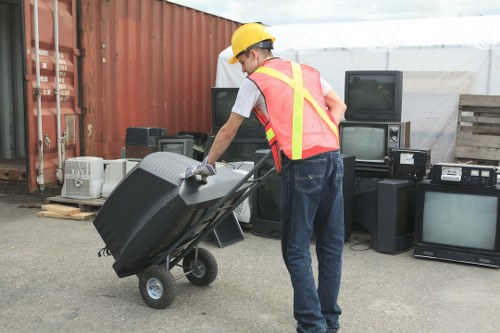
Office clearances often include more than furniture, because many workplaces build up an assortment of IT-related items and loose contents over time. Monitors, docking accessories, keyboards, printers, small desktop devices and redundant office supplies can take up valuable room long after they stop being useful. We can remove those items as part of the agreed clear-out so that the space is easier to repurpose, re-let or hand back in a cleaner condition. The focus remains on the agreed contents, not on overcomplicating the job.
Where electronic equipment is involved, a careful approach is important because not everything should be handled the same way. Some items are best kept separate for recycling, while others may need to be grouped with general office waste if they are no longer usable and are part of the agreed removal. The main point is to sort items sensibly rather than tip everything into one pile. If your project includes a broader range of commercial items, the business waste removal page is a useful place to see how mixed workplace waste can be dealt with.
- Loose office equipment such as desktop accessories and peripherals
- Archived boxes and stored paperwork that no longer needs to stay on site
- General office contents from cupboards, shelves and shared storage areas
- Mixed waste created by a move, a refit or an end-of-tenancy clear-out
How office clearance is organised
Good organisation keeps the process calm and predictable. We usually look first at access, item volume and the mix of materials, then plan the clear-out around the layout of the premises. That might mean removing items from one department before another, or starting with storage rooms so that circulation space opens up as the job progresses. The aim is to work in a logical order that supports safe movement and an efficient finish.
It also helps to decide whether any items need to remain on site for other trades, records work or building handover. Office clearances often sit alongside cleaning, decorating or refit work, so timing can matter as much as the removal itself. A tidy sequence prevents confusion over what should stay and what should go. Where a clear-up is part of a wider project, the clearance should fit the project plan rather than compete with it. For premises with a more general accumulation of unwanted items, our waste removal page may also be relevant.
Because every office has its own layout, it is sensible to describe the main routes, doors, lifts and any possible bottlenecks when requesting a quotation. A concise list is often enough. If the work includes several rooms, adding the approximate number of floors or the presence of basement storage can help. You do not need to over-explain the project; you only need enough detail for the job to be assessed honestly and clearly.
Clearing offices with care
Care matters in offices because many spaces contain a mixture of furniture, working equipment and fixtures that should not be damaged while items are being removed. Floor protection, cautious lifting and attention to corners, door frames and shared corridors can make a noticeable difference to the condition of the premises afterwards. The job is not just to empty a room; it is to do so in a way that respects the building and the other people who use it.
That is especially important where the office is in a managed block, shared building or busy commercial area. Waste should be moved without blocking routes, and any sorting or dismantling should be done in a controlled way. Small details such as safe stacking and clear pathways reduce avoidable problems and help keep the service professional. If your needs extend beyond office-only contents, the furniture disposal page explains how separate pieces can be taken away once they are no longer wanted.
Customers often want a result that is straightforward to inspect: clear floors, cleared desks and no leftover clutter around cupboards or corners. That is what a properly organised office clearance should deliver. In many cases, the final stage is simply to confirm the agreed items have been removed and the area is left ready for its next use.
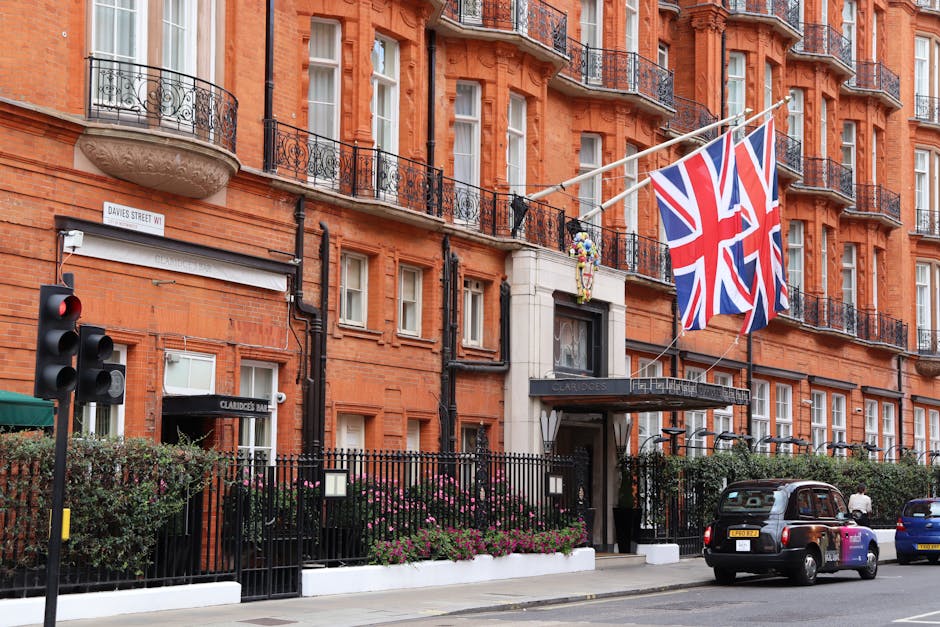
About Mayfair
Mayfair is a district in the West End of London, known for its Georgian terraces, private squares and long association with high-value commercial and residential property. It sits between Hyde Park to the west and central London’s busy retail and diplomatic corridors to the east, with Green Park forming a significant open boundary to the south. The area developed during the 18th century as part of London’s westward expansion, and much of its street pattern still reflects that planned Georgian character. Berkeley Square, Grosvenor Square and Hanover Square are among the best-known open spaces, each giving the district a more formal rhythm than the surrounding traffic routes. Berkeley Square is especially noted for its mature plane trees, while Grosvenor Square has strong historical associations with embassies and international institutions. Mayfair also contains a notable concentration of clubs, galleries, hotels, restaurants and specialist shops, which contribute to its reputation as a polished and varied part of central London. Bond Street and nearby thoroughfares connect the district to a wider commercial landscape, while quieter mews streets and gardens provide contrast with the more active shopping and dining corridors. Despite its central location, Mayfair remains associated with order, symmetry and carefully maintained architecture, and that mix of private squares, historic fronts and contemporary business use gives the district a distinctive identity within the West End.
Commercial waste streams and sorting

Commercial clearances often involve a mixture of materials rather than a single type of rubbish. That means the job benefits from sorting at source, separating reusable furniture, recyclable components and general waste where appropriate. A mixed office can contain timber, metal, plastic, fabric and paper-based contents all in the same room, so careful handling helps prevent one stream from contaminating another. This is one of the reasons a clear office clearance is more effective than an ad hoc removal.
Sorting also supports better decisions when the space contains storage leftovers or long-forgotten items. Boxes, stationery, packaging and outdated displays can often be grouped differently from heavier furniture or fixtures. The process should stay practical, not overcomplicated: identify the agreed items, separate what can be treated differently and remove everything in an orderly sequence. If the project involves a property being returned to a landlord or managed agent, a structured approach can make the final condition much easier to review.
When you are ready to move from planning to action, it is usually enough to ask for a quotation with a brief description of the rooms, item types and access points. That gives enough information to price the work sensibly without building unnecessary assumptions into the job. The clearer the instruction, the more straightforward the clearance can be.
Office moves, refurbishments and changeovers
Office clearance is often needed at transition points: before a move, during a refurbishment or after a layout change that leaves extra furniture behind. In those situations, the work is not just about disposal. It helps create a clean starting point for the next stage, whether that means handing over an empty suite, preparing for decorators or making space for a revised office arrangement. The removal phase should support the overall project rather than interrupt it.
Refit work can produce an especially mixed collection of items, because old desks may be replaced while some storage or seating is retained. That means a clear distinction between what is staying and what is leaving is important. Our role is to remove the agreed office contents and keep the remainder undisturbed. For larger domestic-style clear-outs that share similar decision points, the house clearance page gives another example of a structured removal service.
A well-planned changeover also makes it easier to manage timing around contractors, building access and staff use of the premises. If the office is still partially occupied, the clearance can be organised so that the most disruptive areas are handled first or last, depending on the practical sequence. That flexibility is often what makes a professional removal service worth using.
Requesting your quotation
A quotation should reflect the real shape of the work, not a guessed version of it. For office clearance in Mayfair, the main details are usually the rooms involved, the items to be removed, any access limitations and the timing that suits the building or business. A short written summary is often enough to begin with, and photographs can be useful where there are bulky items or tightly packed rooms. The purpose is simply to make the estimate accurate and fair to both sides.
If you are comparing related services, it can help to look at the broader pages on this site and decide which description fits best. Some customers only need a single room cleared, while others need a full premises emptied. Others may be weighing office clearance against general waste removal or the more item-specific furniture disposal service. Once you know the scope, the next step is to request a quotation and agree the practical arrangement.
Whether the job is straightforward or more involved, the aim is the same: remove the agreed contents cleanly, keep the process organised and leave the office ready for whatever comes next. If you need office clearance in Mayfair, send the details and request a quotation today.